Saturday, July 28, 2018


I’m starting this blog with a picture I have posted on FB already. It “speaks to me” and it is so positive I could not resist.


Scientifically it looks like this….in my mind.


Which may have something to do with this.


And works through you like this….teaching.

And if you are lucky, mentoring two equally old souls. I have been so blessed by The Great Mystery.

My daughter Kersti and my son Zack

As you have become acutely aware over the years, I am a big fan of Astronomy (the first “science”). I even purchased a NASA cap to wear down here to show my support for science in general. Here’s some recent developments and discoveries I would like to share with you.

This is currently the known planets and moons of our solar system. It has grown dramatically since I was a child and is obviously more diverse and colorful than imagined even 10 years ago.

Check out all those moons; each one different and full of surprises to come. As in the case of Jupiter.

The gas giant Jupiter, which was named in honor of the king of the gods in the Roman pantheon, has always lived up to its name. In addition to being the largest planet in the Solar System – with two and a half times the mass of all the other planets combined – it also has an incredibly powerful magnetic field and the most intense storms of any planet in the Solar System.

What’s more, it is home to some of the largest moons in the Solar System (known as the Galilean Moons), and has more known moons than any other planet. And thanks to a recent survey led by Scott S. Sheppard of the Carnegie Institution of Science, twelve more moons have been discovered. This brings the total number of known moons around Jupiter to 79, and could provide new insight into the history of the Solar System.

tps://www.universetoday.com/139641/twelve-new-moons-discovered-around-jupiter-and-one-of-them-is-pretty-odd/

Our sun in comparison to other suns (stars) in our galaxy.


Small but as the ancients knew, and the great Akhenaten wrote a most beautiful poem about, it is our creator. It is what gives life to this “third rock from the sun”. Scientifically: no sun = no photosynthesis = no plants = no oxygen = no animals – that’s you and me folks.
Now we know there is plenty of water out there in our solar system. Two moons are particularly interesting and with the energy from that sun, add some water and a few key elements and life is almost inevitable.

Since the 1970s, when the Voyager probes captured images of Europa’s icy surface, scientists have suspected that life could exist in interior oceans of moons in the outer Solar System. Since then, other evidence has emerged that has bolstered this theory, ranging from icy plumes on Europa and Enceladus, interior models of hydrothermal activity, and even the groundbreaking discovery of complex organic molecules in Enceladus’ plumes.


The Cassini orbiter revealed many fascinating things about the Saturn system before its mission ended in September of 2017. In addition to revealing much about Saturn’s rings and the surface and atmosphere of Titan (Saturn’s largest moon), it was also responsible for the discovery of water plumes coming from Enceladus‘ southern polar region. 


The discovery of these plumes triggered a widespread debate about the possible existence of life in the moon’s interior.

Of all the moons in the solar system, Iapetus has to be among the weirdest. Named after a spear-wielding Titan, the strange Saturnian satellite is less than half the size of Earth’s moon. But it’s a cluster of enigmas: Squished at its poles, the moon is walnut-shaped, has a face as black as coal and a bright white backside, and wears a big, spiky mountain range as a belt.


Even its orbit is weird: Iapetus is roughly three times farther from Saturn than its closest neighbor, Titan. And the path it takes around the planet is tilted, meaning it swings up and down as it orbits, rather than staying in the plane of Saturn’s rings like the rest of the “normal” satellites.
In other words, it’s kind of like the rebel of the Saturnian system, a moon who’d prefer to hang out behind the dumpster and cut class rather than play ball with the other kids.

phenomena.nationalgeographic.com/files/2014/05/Iapetus_equatorial_ridge.jpg

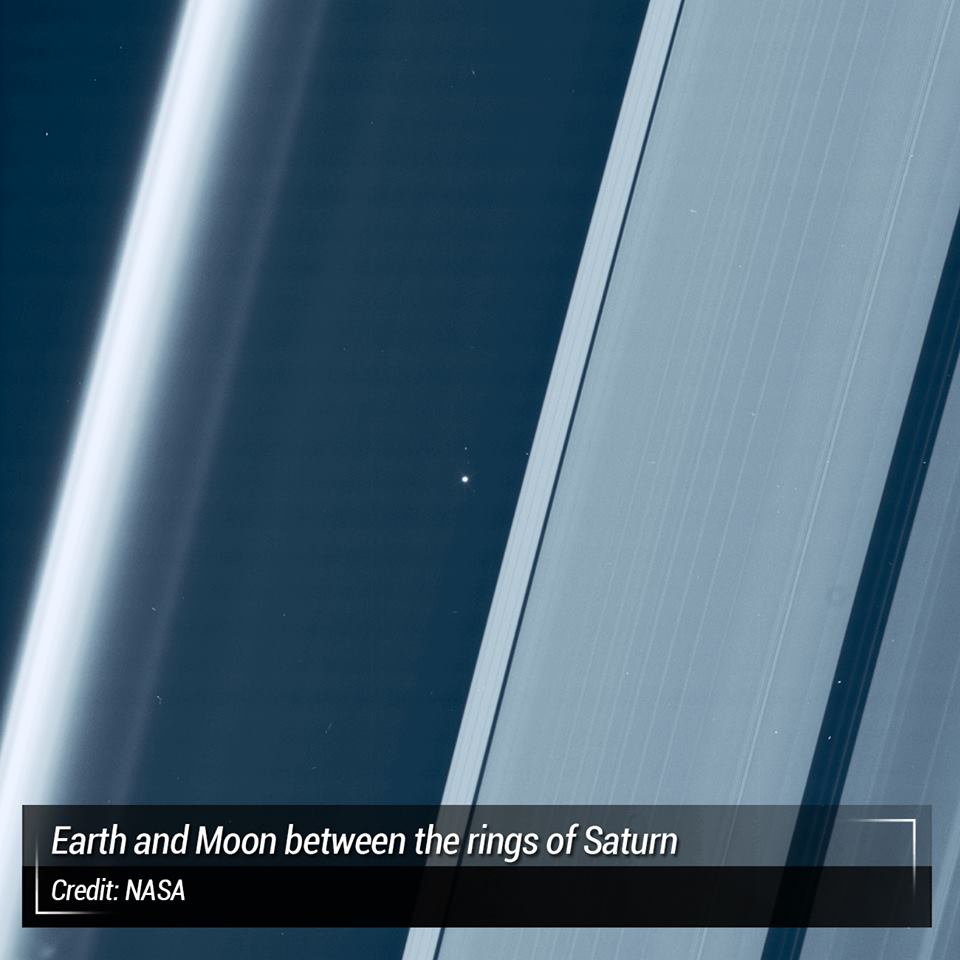
This photo, taken by NASA's Cassini spacecraft, shows Earth and the Moon as points of light between the icy Rings of Saturn. Cassini was 870 million miles (1.4 billion kilometers) away from Earth when the image was taken.  You have to enlarge to see our moon but it's there.


In 1997, the NASA/ESA Cassini-Huygens mission launched from Earth and began its long journey towards the Saturn system. In 2004, the Cassini orbiter arrived around Saturn and would spend the next thirteen years studying the gas giant, its rings, and its system of Moons. On September 15th, 2017, the mission ended when the probe entered Saturn’s upper atmosphere and burned up.

This was known as Cassini’s “Grand Finale“, which began with the probe plunging into the unexplored region that lies between Saturn’s atmosphere and its rings and culminated with live coverage of it entering the atmosphere. In honor of the mission and NASA’s outstanding coverage of its final months, NASA was recently nominated for an Emmy Award by The Academy of Television Arts & Sciences.


And our galaxy, “the Milky Way”, well: same story but equally lovable. Yeah, we’re kind of small and there are about 200 billion out there in our universe.


But fear not, we may visit other galaxies one day.

 Wormholes do exist and we will find a way to travel within them - count on it! 

In the meantime we have some incredible stuff here small as we are.

We have whimsy.

We have fantasy.

This is an actual free diver swimming underwater for a photo shoot

We have royalty.

Irrelevant as it may seem, aren’t they the picture of royalty? I believe they will be part of the resistance, small but significant.

We have comedy all around us.


We have friends and beautiful children.

My dear friend Alfonzo. I cannot begin to tell you all that he means to me.
Ishmael's daughter Rosa. Ishmael makes me Lomboy tea and delivers it to me every 2-3 weeks to combat my cancer.

 Some general just cool stuff

Tony Wu of Tony Wu Underwater Photography slipped into the ocean to swim with sperm whales, yes. But he sure didn't expect THIS: 

And here’s something very rare. A humpback whale whose fluke markings are on the top surface. I’ve ID’d over 280 individual humpbacks and never seen anything like this.

 After a 400-Year Absence, A Rare Ibis Returns to European Skies

The northern bald ibis is critically endangered, with fewer than 1,000 existing in the wild. But a German group is reintroducing these birds in Europe, where they once thrived, and is using ultralight aircraft to lead them on migrations south toward the Mediterranean.
https://e360.yale.edu/features/after-a-400-year-absence-waldrapp-rare-ibis-returns-to-european-skies

In a display that rivals even the most dazzling of firework shows, millions of firefly squid gather off the coast of Japan each spring to perform a sparkling spawning ritual. 

See the spectacle that photographer Solvin Zankl was able to capture during the brief season when the squids’ orbit intersects with our own: http://bit.ly/2KxpLIc

One more animal pic

Cuthulu, is that you? Nope, just a glass octopus with its THREE hearts. Meet more "aliens of the deep" here: bit.ly/2mC3yNi (Photo by Solvin Zankl) #CephalopodWeek


And then there’s us

If you're drawing your genealogical chart, be prepared to buy a lot more paper because the human race is much older than we thought. According to a team led by Jean-Jacques Hublin of the Max Planck Institute for Evolutionary Anthropology and Abdelouahed Ben-Ncer of the National Institute for Archaeology and Heritage in Morocco, fossils and stone tools found in a cave 100 km (62 mi) west of Marrakesh show that Homo Sapiens has been around for at least 300,000 years.


A scientific consortium has found that human ancestors were scattered across Africa, and largely kept apart by a combination of diverse habitats and shifting environmental boundaries, such as forests and deserts. Millennia of separation gave rise to a staggering diversity of human forms, whose mixing ultimately shaped our species. 


Also new findings from “The Iceman”

In 1991, German tourists discovered a human body that was later determined to be the oldest naturally preserved ice mummy, known as Otzi or the Iceman. 

Now, researchers who have conducted the first in-depth analysis of the Iceman's stomach contents offer a rare glimpse of our ancestor's ancient dietary habits. Among other things, their findings show that the Iceman's last meal was heavy on the fat. 

And more discoveries:
Ancient tools and bones discovered in China by archaeologists suggest early humans left Africa and arrived in Asia earlier than previously thought.

The artifacts show that our earliest human ancestors colonized East Asia over two million years ago. They were found by a Chinese team that was led by Professor Zhaoyu Zhu of the Chinese Academy of Sciences, and included Professor Robin Dennell of Exeter University. The tools were discovered at a locality called Shangchen in the southern Chinese Loess Plateau. The oldest are ca. 2.12 million years old, and are c. 270,000 years older than the 1.85 million year old skeletal remains and stone tools from Dmanisi, Georgia, which were previously the earliest evidence of humanity outside Africa.


Last thoughts


Intellectual freedom, science not myth.


Saturday, June 30, 2018


The Thinking Tree - an ancient olive tree in Puglia, Italy
Trees might be among our lushest metaphors and sensemaking frameworks for knowledge precisely because the richness of what they say is more than metaphorical — they speak a sophisticated silent language, communicating complex information via smell, taste, and electrical impulses. This fascinating secret world of signals is what German forester Peter Wohlleben explores in The Hidden Life of Trees: What They Feel, How They Communicate


And this is how they make you feel!

My daughter Kersti in pink and Nicky, one of her very close friends. Strolling in the woods.


And with a little ingenuity this is how you can help them grow:


An ancient civilization that pioneered irrigation & agricultural techniques.

"Persian agriculture relied heavily on the irrigation systems: Qanats and Canals. In the early part of the 1st Millennium BC, the Persians started constructing elaborate tunnel systems called qanats for extracting groundwater/artesian water in the dry mountain basins of present day Iran."

Amazing Historic Persian Garden in the middle of Desert. Kerman, Iran
www.ancient-origins.net


Here’s a really controversial theory that may or may not be a bit “wacky” but it is at least an interesting conjecture – it’s worth reading. It's more about timing than origin.

 
Aboriginal Australian archaeology findings prompt rethinking of the “Out of Africa” theory  

https://www.thevintagenews.com/2018/01/20/aboriginal-australian-archaeology/ 

Three interesting stories: 

In the early 1920s, 23-year-old Inuit woman named  Blackjack endured a two-year stay on frosty Wrangel Island. 


               https://www.atlasobscura.com/articles/ada-blackjack-arctic-survivor


Doris Miller wearing the Navy Cross medal, having just been awarded from Admiral Chester Nimitz, onboard carrier Enterprise, Pearl Harbor, US Territory of Hawaii, 27 May 1942. If you haven't read about him, well, now you can.


Members of Mexico's 201st Air Fighter Squadron "Aztec Eagles" and a P-47 Thunderbolt during the Philippines Campaign in 1945.

 Bet you never heard about these guys either.  


So much to learn, eh?


Astronomy time


Latest photo of the planet Venus with the Hubble telescope (worth every penny)


 Venus w/o it's sulfuric acid cloud layer.


NASA's New Horizons probe - the same one that gave us stunning photos of Pluto- has just woken up, approximately 6 billion kilometres (3.7 billion miles) from home. 


It's currently flying through the Kuiper Belt, and off on an exciting mission scheduled for New Year's Day – the first-ever flyby of the Kuiper Belt object nicknamed Ultima Thule.
http://www.sci-techuniverse.com/2018/06/a-nasa-probe-just-woke-up-6-billion.html


Scientists working with telescopes at the European Southern Observatory and NASA announced a remarkable new discovery: An entire system of Earth-sized planets. 


If that’s not enough, the team asserts that the density measurements of the planets indicates that the six innermost are Earth-like rocky worlds.


And that’s just the beginning.


The Apophis asteroid – the Egyptian God of death and darkness – is the size of the rose bowl. 


On Friday the 13th, April 2029, Apophis “will come close enough to earth to dip below our orbiting communication satellites…it will be the biggest, closest thing ever to come to Earth in our recorded history,” he says, “now the uncertainty in that orbit includes the keyhole – a narrow region within these uncertainties…”


And NASA’s Big Announcement is: Ancient Organic Molecules Found on Mars!
In the first paper, the authors indicate how Curiosity’s Sample Analysis at Mars (SAM) suite detected traces of methane in drill samples it took from Martian rocks. Once these rocks were heated, they released an array of organics and volatiles similar to how organic-rich sedimentary rocks do on Earth. On Earth, such deposits are indications of fossilized organic life, which may or may not be the case with the samples examined by Curiosity.
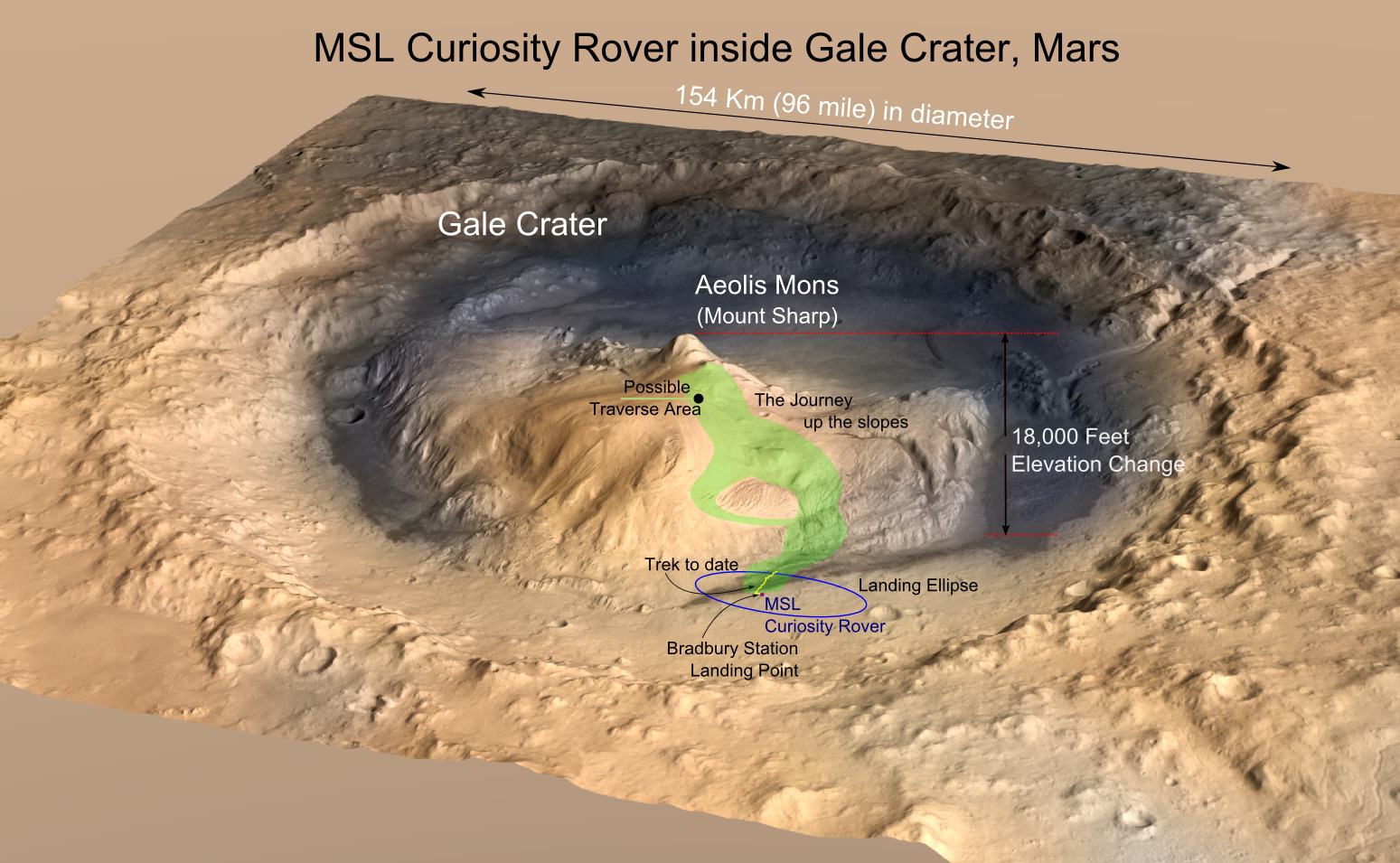


However, this evidence is bolstered by the fact that Curiosity has also found evidence that the Gale Crater was once an ancient lakebed. In addition to water, this lakebed contained all the chemical building blocks and energy sources that are necessary for life. Next story


Some cool animal stuff:


                                 From my talented friend Anne in Canada.

                           Scientists See Promise in Resurrecting These Rhinos That Are Nearly Extinct.

Even if the technology can bring back the northern white rhinoceros, should we do it?


                                          Intensity in the eye of the hunter


Always one of my favorite critters
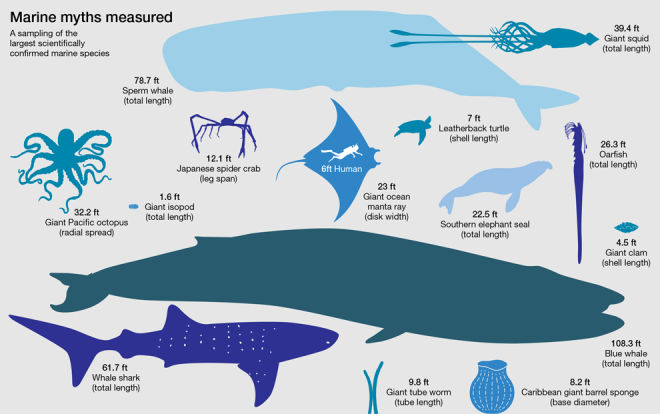
I have had the pleasure of swimming with the three largest critters here.
                                                                      Pissed wolves


                                                                Blue pit viper


The back of an adult male gharial provides babies with both protection and a convenient place to bask in the sun. A closer look from the banks of the Chambal River, the critically endangered species’ last remaining stronghold: 

Creaturely Migrations on a Breathing Planet

by David Abram

Through his observations of cranes, butterflies, and salmon in the course of their annual migrations, cultural ecologist and philosopher David Abram reflects on the deep intelligence that lies at the heart of migration patterns. 


Lets not piss off Mother Nature, OK?


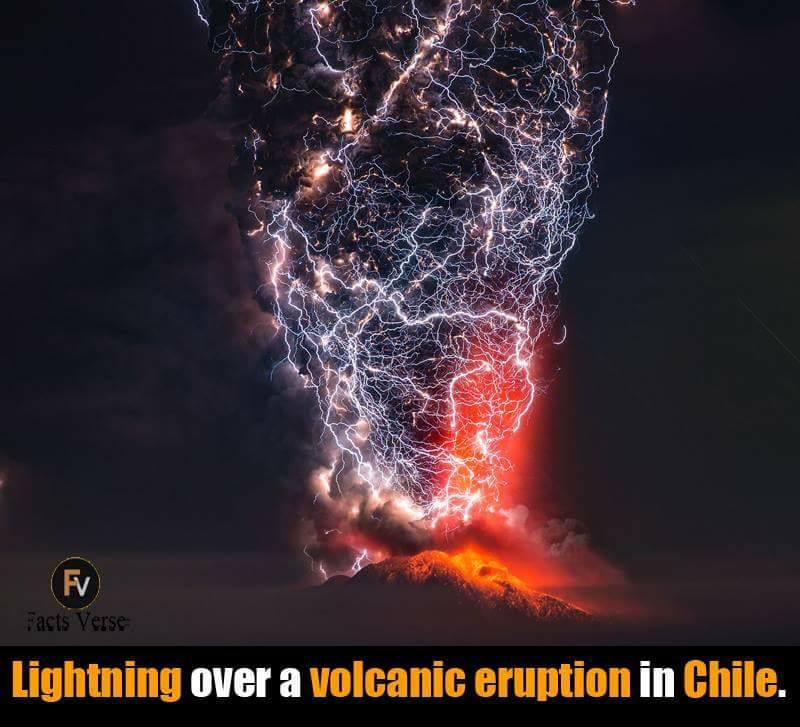
Lightnings and volcanoes blending looks crazy, Chile


A little anthropology:

An Ancient City Emerges in a Remote Rain Forest.

The revelation of an ancient city in a valley in the Mosquitia mountains, of Honduras, one of the last scientifically unexplored regions on Earth, was a different story. This was the first time a large archaeological site had been discovered in a purely speculative search using a technology called LIDAR, or “light detection and ranging,” which can map terrain through the thickest jungle foliage, an event I chronicled in a story for the magazine in 2013. As a result, this discovery revealed something vanishingly rare: a city in an absolutely intact, undisturbed, pristine state, buried in a rain forest so remote and untouched that the animals there appeared never to have seen people before. There is a full video here so you might want to see it.


The stairs in the Palace of Knossos.
www.ancient-origins.net


A grave in southwest Russia dating to the 5th century B.C. has yielded an ancient bronze Corinthian helmet, the first Greek helmet of its kind to be found north of the Black Sea in the Greek Kingdom of the Bosporus, researchers say.


                                 I've always been fascinated by Egyptian jewelry.

                              Island of Aogoshima, Japan. Yes, people live there.


Some Science stuff:
 One of the best-known regions of the brain, the cerebellum, accounts for just 10 percent of the organ's total volume, but contains more than 50 percent of its neurons.
Despite all that processing power, it's been assumed that the cerebellum functions largely outside the realm of conscious awareness, instead coordinating physical activities like standing and breathing.


But last year neuroscientists discovered that it plays an important role in the reward response - one of the main drives that motivate and shape human behaviour.

https://www.sciencealert.com/cerebellum-human-brain-neuroscience-discover-new-role-behaviour-reward-response?utm_source=Facebook&utm_medium=Branded+Content&utm_campaign=ScienceNaturePageSign


Scientists Find Fractal Patterns & Golden Ratio Pulses in Stars


Plato had theorized that the Universe as a whole is simply a resonance of the “Music or Harmony of the Spheres.” This new study may provide deeper insights to pairing the Philosophies & Spiritual Sciences offered throughout the ages with modern Astronomy, and how we may understand the underlying elegance of nature as a whole.

https://www.qwaym.com/scientists-find-fractal-patterns-golden-ratio-pulses-stars/


Oh, to be 67 years old again!